
Have you ever finished a trimming job and wondered why the edges still look rough, or why the line kept snapping before the work was done? Most people replace the spool and move on. Few consider that the profile of the line itself may be the cause.
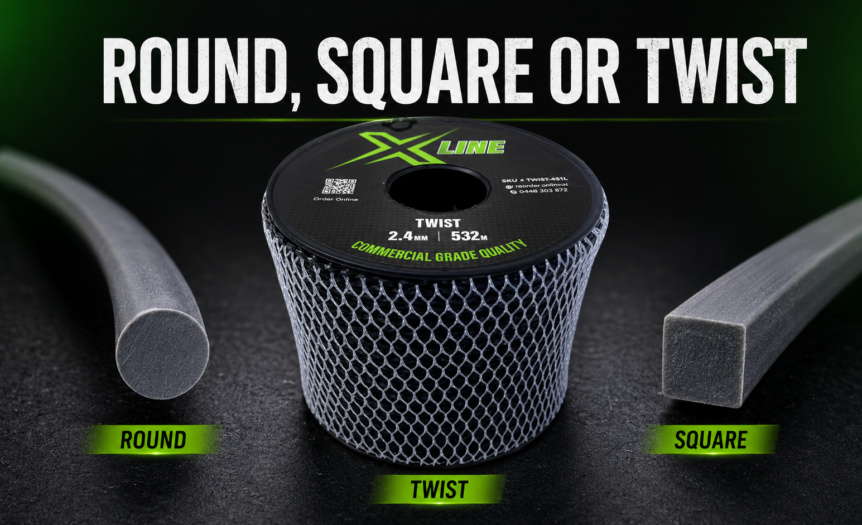
Trimmer line comes in three main profiles: round, square, and twist. Each is designed for different conditions and cutting demands. Choosing between the available trimmer lines comes down to understanding what each profile is designed to do. This article covers the differences, the trade-offs, and which profile generally suits which task.
What Is a Round Trimmer Line?
Round trimmer line is the most common profile available and the default choice for most domestic trimmers. It is widely stocked, compatible with the majority of trimmer heads, and feeds smoothly through auto-feed systems. Round line is generally durable in everyday use and well-suited to open lawn areas and light vegetation.
Benefits of Round Trimmer Line
Round line is designed for general lawn maintenance where compatibility and reliability are the priority. It handles regular grass cutting across flat terrain without issue. Many homeowners find it performs consistently for routine weekend jobs.
Limitations of Round Trimmer Line
Round trimmer line may struggle with thick or woody vegetation where more cutting force is needed. It can leave a less defined edge compared to square or twisted profiles. For edging along garden beds or fence lines, round line is often not the most effective choice.
What Is a Square Trimmer Line?
Square trimmer line features four distinct cutting edges, designed to produce a cleaner, sharper cut with each rotation. It is often considered the preferred profile for edging work and performs well on coarse grass and tougher vegetation. The additional edges increase cutting efficiency compared to standard round line.
Benefits of Square Trimmer Line
Square line is designed for situations where edge definition matters. It produces a cleaner finish along fence lines and garden beds and generally handles coarser grass more effectively than round line. Many professionals use square trimmer line when the quality of the cut edge is a priority.
Limitations of Square Trimmer Line
Square trimmer line may wear faster than round line in abrasive conditions, particularly near concrete edges or gravel borders. It is not always compatible with every trimmer head, so checking manufacturer specifications before purchasing is advisable. Square line can also be harder to source from general hardware retailers.
What Is a Twisted Trimmer Line?
Twisted trimmer line features an aerodynamic spiral profile designed to reduce drag, vibration, and noise during operation. It cuts through dense vegetation more efficiently than standard round line and is often considered a capable all-round upgrade for regular users. Many professionals use twisted line for heavy-duty or extended work sessions.
Benefits of Twisted Trimmer Line
Twisted line is designed for conditions where cutting resistance and operator fatigue are factors. It generally produces less vibration and noise than round or square profiles. For larger properties or tougher vegetation, twisted trimmer line may perform better over a full working session.
Limitations of Twisted Trimmer Line
Twisted trimmer line typically costs more than round or square options. On light residential jobs with regular grass, the performance difference may be less noticeable. Compatibility also varies by trimmer model, so checking head specifications before switching is recommended.
Which Profile Should You Choose?
Selecting the right trimmer line profile comes down to matching the line to the task at hand. Round line suits general lawn maintenance where compatibility and budget are the main considerations. Square line is the more practical choice for clean edging along defined borders and coarser grass. Twisted line is worth considering for heavier vegetation, longer sessions, or where reduced noise and vibration are a factor.
Line diameter also affects cutting performance and should be matched to the trimmer’s specifications. For most persistent performance issues, switching profiles is often the more effective fix before looking at the trimmer itself.
Choosing the Right Trimmer Line Profile
Trimmer line profile is a detail many users overlook, but it has a direct impact on cutting performance and edge quality. Round line suits general maintenance, square line is designed for cleaner edges, and twisted line generally performs better in heavier conditions and extended use.
Matching the profile to the most common task is a practical starting point before the next purchase. The right choice often resolves performance issues that are easy to mistake for operator error.

