

An appealing outdoor landscape doesn’t necessarily need to become a full-scale project or take too much money. The most frequent mistake in landscaping is the purchase of plants and materials without a clear plan.
In order to stretch your budget as much as possible, try to approach your yard step-by-step: protect what works well, focus on immediate improvements that bring visual benefit, and spend wisely. When planning the yard or comparing the cost estimates for professional services in order to know what you should DIY yourself, consultation with experienced landscape contractors san anotnio may be useful for you to understand the realistic cost for materials, labor, and overall project phasing.
1. Set Your Budget Before You Touch the Yard
Before you even buy a bag of soil or a flat of flowers, divide your overall budgeting into several parts. Prioritize your expenditures in this way:
- Must Fix: Safety problems, current erosion, or poor drainage that threatens the foundation of the house.
- High-Impact Improvements: Improvements that create the immediate visual impact, such as the bed edging or new mulch.
- Nice-to-Have Upgrades: Not necessary upgrades, for example, the decorative pots, lighting for the backyard, or some special plants.
Always keep 10% to 15% of your total budget for emergency spending that may appear, for instance, when uncovering the underground utilities or soil amendment.
2. Start With What You Already Have
Clearing healthy mature trees, shrubs, or any hardscape requires unnecessary labor and replacement costs. According to research from the university cooperative extension programs, you should always analyze your site conditions and work around mature growth as much as you can.
Instead of clearing the garden beds, you can simply remove the weeds and cut the overgrowth of limbs. Mature shrubs can get their second youth after rejuvenation pruning. Moreover, you can clean the existing stones, bricks, or concrete pavers with the pressure washer and reuse them for the border paths or tree rings. Instead of planting something new, you can just move your healthy but incorrectly planted plants.
3. Plan the Yard Before Buying Materials
A basic DIY site assessment will help you avoid the costly mistake of buying plants that won’t survive where they are planted. Draw a simple diagram of your yard showing:
- Footprint of house and pathways
- Mature trees and their shade zones throughout the day
- Areas with full sun and areas with prevailing winds
- Sloped and naturally-draining zones
- Property lines and underground utility locations
Pairing plants with existing light, moisture, and soil conditions will eliminate the expensive trial-and-error cycle of plant selection.
4. Spend First on High-Impact Improvements
When working with limited funds, target updates that provide immediate visual impact. Visual consistency creates a polished look far more effectively than scattering mismatched plants across a bare lawn.
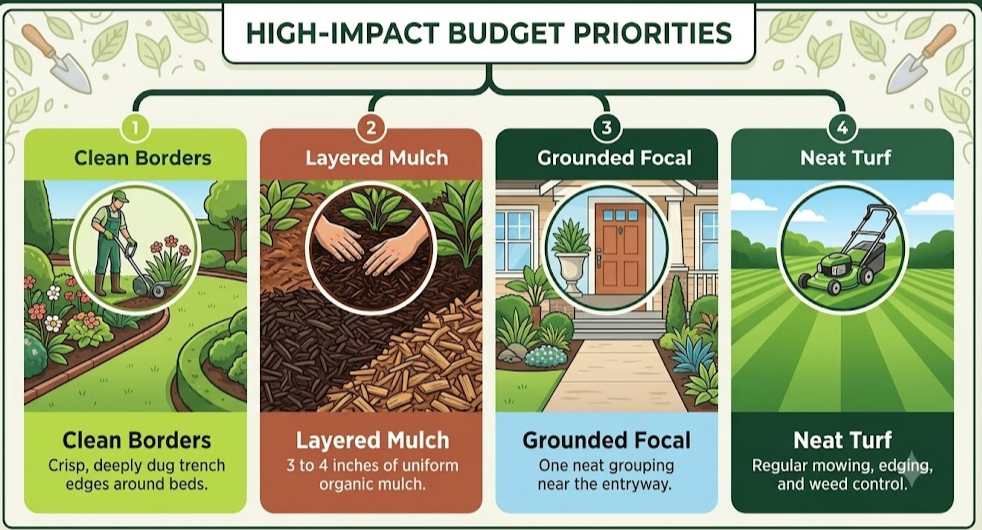
Spending your money on your front entrance or the primary outdoor living space provides the most ROI visually.
5. Choose Plants That Save Money Later
The plant that costs the least amount in the nursery is often going to end up being one of the most expensive over time. Life cycle landscape cost data from Utah State University Extension proves that the initial cost is just one piece of the pie; water usage, maintenance, labor, and replacement costs complete the rest of it.
Go for plants native to your area. Place plants that have similar water and light requirements together in different “hydrozones” to prevent excess watering and lower your utility bills. Purchase plants in smaller pots (e.g., 1 gallon instead of 5 gallons). Younger and healthier plants establish themselves in less time and will catch up in size within 1-2 seasons at a significantly lower price.
6. Use Mulch and Soil Improvements Strategically
Good soil decreases plant loss and lowers long-term need for water. According to the United States Environmental Protection Agency (EPA), about 4 to 6 inches of topsoil must be maintained for proper retention and release of rainfall into the plants’ roots.
Use a 3- to 4-inch layer of organic mulch such as shredded bark and arborist wood chips on garden beds. Mulching controls weeds, moderates the temperature of the soil, minimizes erosion, and reduces evaporation by a tremendous amount. Be careful not to apply mulch directly to tree trunks or stems since this may lead to rotting and insect infestations.
7. DIY What You Can, Hire What You Should
Doing easy projects will help save on labor costs, while undertaking difficult constructions without any previous knowledge is costly in terms of fixing errors.
- DIY Projects: Planting perennials and shrubs, laying down mulch, trenching around the garden beds, weeding, and regular maintenance.
- Hire a Landscape Professional: Grading, complicated drainage, pruning trees high above structures, structural walls, and installing main irrigation lines.
When your project requires either structural work or significant excavation, getting estimates from reliable landscape contractors san anotnio is a guarantee of safety and legality, as well as proper yard grading.
8. Keep the Yard Affordable After Installation
Water consumption in residential outdoor spaces in the U.S. reaches almost 8 billion gallons per day, with most of it being spent on landscaping irrigation. Reduce your expenses on operation by using water resources efficiently:
- Water plants thoroughly but rarely early in the morning.
- Install WaterSense-labeled soil moisture sensors or smart irrigation controllers that could help to save, on average, more than 15,000 gallons of water annually for the automated household.
- Pour water manually near the roots of young plants instead of sprinkling empty spots.
- Keep weeding regularly to ensure that roots of the invading plants don’t compete with your plants for the nutrient content and moisture in the soil.
Build Your Yard in Phases
To create an attractive yard design for the least money possible, it’s necessary to follow some simple principles: Assess → Plan → Prioritize → Reuse → Plant → Mulch → Maintenance. By addressing the issues with your property step-by-step, not rushing into an expensive and unnecessary full-scale yard renovation, you will be able to control your budget completely.

