

Quick Answer
Acreage landscaping works best when you treat the property as a set of connected zones rather than one enormous yard. Start with a site assessment covering soil, slope, wind exposure, and drainage. Then decide which areas get high-detail treatment near the house and which stay natural. Build in phases, protect young plantings from prairie wind, and choose materials that hold up through freeze-thaw cycles.
Introduction
You walk out your back door onto five acres, coffee in hand, and realize you have no idea where the yard is supposed to end. That feeling is common on rural properties. Techniques that work on a city lot — a patio here, a flower bed there — simply vanish across that much open ground.
A shrub that anchors a suburban corner disappears beside a shelterbelt. A pathway that feels generous downtown reads as a thin ribbon across a field. Firms that specialize in acreage landscaping Calgary properties tend to start with the land itself rather than a wish list, because the site dictates what will survive and what will not.
Big properties reward planning more than they punish it. Once you understand your ground, the decisions get easier.
Site Assessment, Grading and Zoning: Reading the Land First
Large properties hide problems that small lots reveal immediately. A backyard puddle is obvious within a week. On ten acres, a drainage issue may only surface after the first heavy spring melt, once thousands of dollars of work is already in the ground. Good acreage yard design Calgary homeowners rely on begins with a site assessment that maps what the land is already doing.
Soil, Slope, Wind and What’s Already Growing
Much of the land around Calgary sits on heavy clay with a thin topsoil layer. Clay holds water, drains slowly, and heaves in spring, so a soil test tells you whether you need amendments, raised beds, or a different plant list entirely.
Water moves downhill toward your foundation, your septic field, and your driveway. Mapping the grade shows where runoff collects and where berms or swales will do the most good. Wind matters just as much. Chinooks tear across southern Alberta at highway speeds, and properties in Bearspaw, Springbank, and Priddis lose newly planted shrubs every year to wind burn and dried-out roots.
Then there is what already grows there. Mature poplars and spruce took decades to establish, and they are worth designing around rather than clearing away.
Zoning the Property by Intensity
Rather than landscaping everything, divide the property into bands of decreasing intensity:
|
Zone |
Distance from house |
Treatment |
Upkeep level |
|
Core |
0–30 m |
Patios, lawn, garden beds, lighting |
High |
|
Transition |
30–100 m |
Ornamental trees, gravel paths, orchard |
Moderate |
|
Perimeter |
100 m+ |
Shelterbelt, native grass, pasture |
Low |
This structure keeps the budget from ballooning and stops the mowing from eating your weekends. Most owners find that concentrating detail near the house delivers the bulk of the enjoyment for a fraction of the cost.
Driveways, Turnarounds and Snow Clearing
Driveways on rural property landscaping Calgary projects carry more weight than their urban equivalents. They handle delivery trucks, snow removal equipment, horse trailers, and guests. Build them wide enough for two vehicles to pass, add a turnaround near the house, and grade them so meltwater sheds to the sides instead of pooling at the garage.
Once the zones and access routes are settled, the question becomes how to get it all built without draining the account in one season.
Phasing the Build: Hardscaping, Shelterbelts and Budget Order
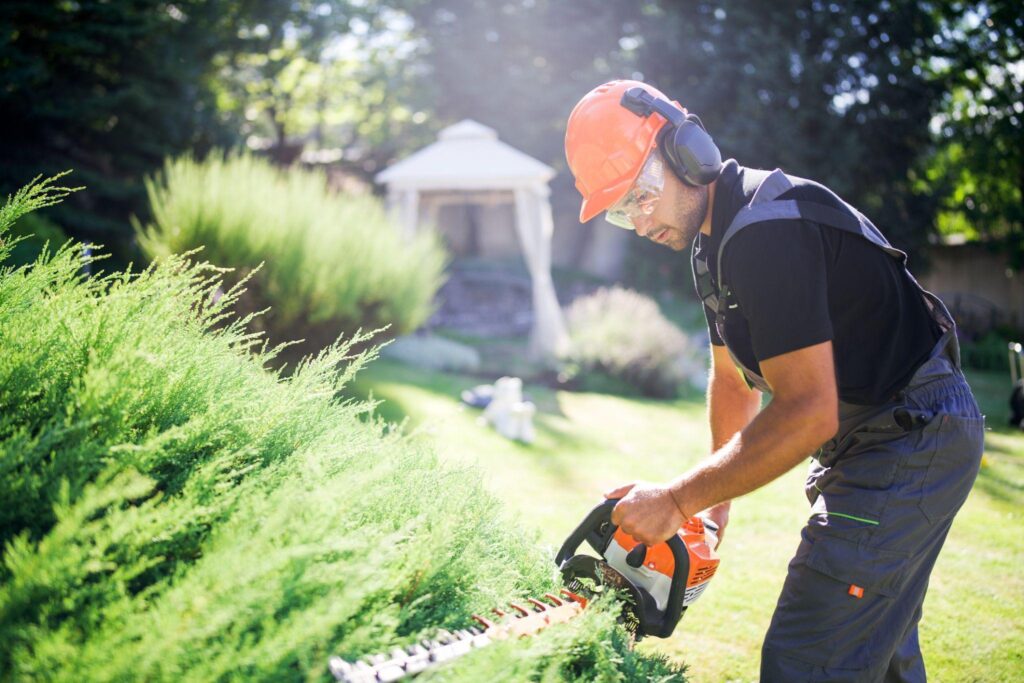
Very few people install an entire acreage in one summer, and the ones who try often regret the rushed decisions. A phased build spreads cost across several years while letting you live with each stage before committing to the next. The key is having a master plan on paper first, so phase three does not require tearing out phase one.
A Sensible Build Order
- Year one: Grading, drainage, and the driveway. Anything involving heavy equipment happens before finished surfaces go in.
- Year two: Shelterbelt and major tree planting. Trees need the longest runway, so get them in the ground early.
- Year three: Patio, fire pit, and the core outdoor living area.
- Year four onward: Garden beds, lighting, water features, and the details that make the space personal.
Trees and Shrubs That Survive Zone 3
Zone 3 winters, Chinook thaws, and dry summers eliminate most of what fills the racks at big-box garden centres. Reliable performers for acreage landscaping Alberta conditions include Colorado spruce, Swedish aspen, dogwood, potentilla, and native grasses like blue grama. Group plantings in odd-numbered masses of five or seven, since a single specimen shrub reads as a weed at acreage scale.
Water young plantings deeply for the first three seasons and mulch heavily. Wind pulls moisture from foliage faster than most owners expect.
Where the Budget Actually Goes
Hardscaping consumes the largest share of most budgets. Retaining walls, driveways, and patios involve excavation, base material, and labour that plants never require. If money is tight, scale back the stone before you scale back the trees. Plants appreciate over time while an undersized patio stays undersized.
Hiring matters here too. Ask any contractor for acreage references specifically, confirm they carry liability insurance and WCB coverage, and get the phasing written into the contract.
The result of that patience is a property that grows into itself rather than one that looks its best the week the crew drives away.
Planting for the Next Owner, Not Just Next Summer
An acreage rewards owners who think in decades rather than seasons. The shelterbelt you plant this spring will not do much for five years, and then it will quietly protect everything else on the property for the next fifty. That long arc is what separates rural work from a weekend suburban makeover.
Three habits carry the most weight: assess the site before designing anything, drop the intensity as you move away from the house, and build in phases against a plan you actually stick to.
Get those right, and the rest becomes refinement. A bench where the view opens up, a path worn smooth by use, trees your kids will remember climbing. Design for the version of the property that exists twenty years from now, and the early years take care of themselves.

