
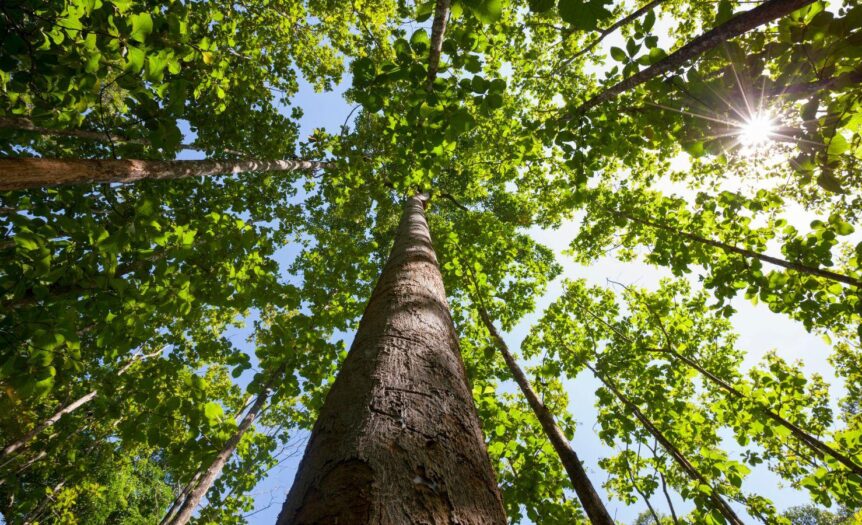
Walk down a block lined with decades-old trees and the difference is immediate, cooler air, softer light, a kind of quiet that newer, treeless streets don’t have. Most people register this as pure aesthetics, a nice backdrop, nothing more. The research tells a more specific story: mature tree canopy is doing measurable physical work, not just looking good while it does it.
That distinction matters more than it might seem. Treating tree canopy as decoration means it’s the first thing sacrificed when a lot gets redeveloped or a road gets widened. Treating it as functional infrastructure, which the research increasingly supports, changes the calculus considerably.
The Cooling Effect Nobody Notices Until It’s Gone
The most studied benefit of urban tree canopy is temperature regulation, and the effect is larger than most people assume. Research from the U.S. Forest Service found that tree canopy cover produced its strongest cooling effect around midday, reducing air temperature by as much as 1.6 degrees Celsius during peak afternoon heat on clear days, compared to areas dominated by impervious surfaces like pavement and rooftops. That’s not a marginal difference on a genuinely hot day, it’s the gap between a block that stays livable through an afternoon heat wave and one that doesn’t.
The mechanism is straightforward: trees provide direct shade, and they release moisture through their leaves in a process that actively cools the surrounding air, unlike pavement and buildings, which absorb heat throughout the day and radiate it back well into the evening. That combination, shade plus active cooling, is why a tree-lined block can feel noticeably different from a sun-exposed one even at the same time of day and the same outdoor temperature reading a few blocks away.
What This Actually Looks Like on the Ground
A neighborhood’s tree canopy isn’t an abstraction, it’s specific streets that have kept their older growth intact rather than clearing it for new construction or wider roads. Take Wallingford: a residential grid of pre-1930 homes that’s kept its mature tree canopy largely intact even as some blocks bring in newer construction alongside the older housing stock.
That kind of canopy doesn’t happen quickly. A tree providing meaningful shade and cooling effect is typically decades old, which means a neighborhood either protected its older trees through waves of development, or it didn’t, and there’s no fast way to manufacture the difference after the fact. A newly planted street tree is a reasonable long-term investment, but it won’t provide the same cooling or shade for a generation, which is exactly why an already-mature canopy carries more weight than a plan to eventually plant one.
What Tree Canopy Does Beyond Temperature
Cooling isn’t the only documented benefit, though it’s the most measurable one. Research reviewing the broader value of urban tree canopy points to reduced mental stress, improved outcomes tied to more active, walkable environments, and better air quality from particulate filtering, alongside more practical infrastructure benefits like stormwater absorption that reduces flooding risk on paved, tree-sparse streets. Each of these effects has been studied somewhat independently, but they tend to reinforce each other in a real neighborhood: a cooler, shadier street is also a more walkable one, which in turn supports more of the casual outdoor activity tied to better mental health outcomes.
None of these effects require a person to consciously notice the trees to benefit from them. They’re closer to background infrastructure than a deliberate wellness feature, working quietly whether or not anyone walking past is thinking about it.
The Property Value Case for Old Trees
The financial angle tends to get less attention than the environmental one, but it’s well documented. A peer-reviewed study on tree canopy and residential resale values found a consistent positive relationship between canopy coverage and sale price across different property value tiers, with the effect holding even after controlling for other neighborhood characteristics like school ratings and proximity to amenities. Older, established canopy in particular tends to carry more weight than newly planted trees, since buyers are effectively paying for decades of growth they can’t replicate on their own timeline, no matter how much they’re willing to spend on landscaping after closing.
That’s a meaningfully different kind of value than most home features carry. A renovated kitchen can be replicated in a few months with enough budget. A hundred-year-old tree canopy cannot, at any price. For a buyer weighing a purchase in a neighborhood like Wallingford, where the market has cooled enough to hand back some negotiating room, that’s exactly the kind of feature worth factoring into the decision alongside price and square footage, not after them.
Why Mature Canopy Is Hard to Get Back Once It’s Gone
This is the part that makes tree canopy a genuinely different kind of neighborhood asset than most others. A commercial strip can be rebuilt, a park can be replanted, a housing stock can modernize block by block over a decade. A mature tree canopy, once it’s cleared for new construction or infrastructure, takes generations to replace, not years, which puts it in a different category from almost every other neighborhood feature buyers typically weigh.
That asymmetry is worth sitting with. The neighborhoods that kept their older trees through decades of development pressure didn’t do it by accident, and the ones that cleared them rarely get a fast way back to what they had. For anyone evaluating a neighborhood’s long-term character, canopy age is one of the more honest signals available, it’s very hard to fake, and even harder to rebuild once it’s gone. In a neighborhood like Wallingford, where a slower pace of new construction has left the older canopy mostly undisturbed, that’s a detail worth walking the actual blocks to see for yourself, not just reading about in a listing description.

