

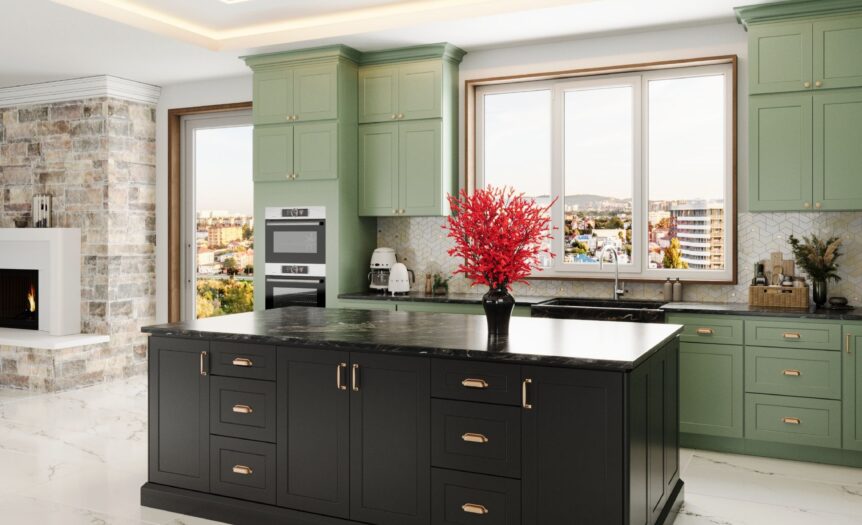
The smartest way to organize a kitchen is by zones, not by cramming more into the cabinets you have, because a frustrating kitchen is rarely short on storage. It is short on logic. Things end up wherever there was a free shelf the day they were unpacked, so the colander lives three steps from the sink, the spices sit across the room from the stove, and the seldom-used canning gear hogs prime cabinet space at eye level. Reorganizing around how you actually move through the kitchen makes a space of any size feel calmer and larger without adding a single inch. The short version: divide the kitchen into five working zones and store each item at its point of first use.
The tool for this is zoning, borrowed from professional kitchen design. You divide the kitchen into a handful of activity areas and give each one the storage that serves it, so that everything you need for a task is within a step of where you do it.
The Five Kitchen Work Zones Explained
Almost every kitchen, however small, contains the same five working areas, even if they overlap. Naming them is the first step to storing things sensibly.
There is the prep zone, the counter where chopping and mixing happen, usually between the sink and the stove. The cooking zone at and around the range. The cleaning zone at the sink and dishwasher. The consumables zone where food is kept, the pantry and its overflow. And the non-daily zone, the home for everything used occasionally: large platters, the stand mixer, holiday dishes, and the seasonal overflow from gardening and outdoor entertaining that has to live somewhere. This zone-based approach is what professional designers follow under the NKBA planning guidelines, and once you can see the five, you can match storage to each.
Which Kitchen Cabinets Suit Each Zone
The principle of zoning is simple: store each thing at its point of first use. Then the right cabinet for each zone follows naturally.
The prep zone wants knives, boards, and mixing bowls in the cabinet or drawer right beside the work surface, with the trash pull-out close by for scraps. Where space allows, building a kitchen island from base cabinets expands this zone, adding both prep surface and storage in the middle of the room. The cooking zone wants pots, pans, oils, and the utensils you cook with within arm’s reach of the stove, and deep drawers serve this far better than low door-front cabinets, because a full-extension drawer brings a heavy stack of pans out to you instead of making you crouch and reach into a dark cavity. The cleaning zone wants the dish soap, scrubbers, and cleaning supplies in the cabinet under the sink, and the dishes and glasses stored near the dishwasher so unloading is a turn, not a trek.
The consumables zone is where a dedicated pantry earns its place. A tall pantry cabinet holds an enormous volume of food in a footprint no larger than a standard cabinet, using full floor-to-ceiling height, which is why it is the most efficient single storage addition most kitchens can make. Because a full cabinet line offers these configurations in matching finishes, the pieces can be chosen for their zone and still coordinate, a tall pantry for the consumables zone paired with drawer bases by the stove and standard uppers elsewhere, all in one color. The kitchen gets built around how it is used rather than forcing the use to fit whatever cabinets came standard.
How to Store Rarely-Used Kitchen Items and Cut Clutter
The single biggest cause of a cluttered, cramped-feeling kitchen is daily space lost to non-daily things. The waffle iron used twice a year, the big roasting pan, the canning jars, the platters that come out for gatherings, and the overflow from the garden and patio, all of it competing for the cabinets that should hold what you reach for every day.
The fix is to give the occasional items their own zone, deliberately, in the least valuable real estate. That means the highest shelves of ceiling-height wall cabinets, which capture the dead space standard uppers leave empty above them, and the back reaches of corner cabinets fitted with mechanisms that pull the contents out to you. Sent there, the occasional gear stops stealing the prime, easy-reach storage that daily cooking needs, and the everyday kitchen suddenly breathes.
Organizing Your Kitchen Without Buying New Cabinets
Zoning does not always require new cabinets. A great deal of it is just moving things to their right zone and adding inexpensive organizers: drawer dividers so a prep drawer holds its tools in order, shelf risers to double a cabinet’s vertical use, door-mounted racks for lids and spices in the cooking zone, and retrofit pull-outs to make a deep base cabinet’s back half reachable.
Where the existing cabinets genuinely fight the zones, though, a targeted change fixes it at the source: swapping a door-front base by the stove for a drawer base, or adding a pantry cabinet to create a real consumables zone where there wasn’t one. Because ready-to-assemble cabinetry makes these single-cabinet additions affordable, fixing a zoning problem rarely means a full remodel, just the one or two pieces the layout was missing.
Frequently asked questions about kitchen organization
What is kitchen zoning? Dividing the kitchen into activity areas, prep, cooking, cleaning, consumables, and non-daily items, and storing what each task needs within a step of where the task happens. It makes a kitchen of any size work more smoothly.
Where should pots and pans be stored? In the cooking zone, within reach of the stove, ideally in deep full-extension drawers rather than low door-front cabinets, so a heavy stack comes out to you instead of requiring a reach into a dark, deep cavity.
What is the most efficient way to add a lot of storage? A tall pantry cabinet. It uses full floor-to-ceiling height to hold a large volume in a footprint no bigger than a standard cabinet, making it the most efficient single storage addition for most kitchens.
Where should rarely-used items go? In a deliberate non-daily zone made of the least valuable space: the high shelves of ceiling-height wall cabinets and the back of corner cabinets. This frees prime, easy-reach storage for everyday items.
Can I reorganize by zones without buying new cabinets? Often yes. Moving items to their correct zone plus inexpensive organizers, dividers, shelf risers, door racks, and pull-outs, accomplishes much of it. New cabinets are only needed where the layout genuinely lacks a piece, like a drawer base or a pantry.
A kitchen feels generous when everything has a logical home and that home is where you use the thing. Walk your kitchen as the five zones, store each item at its point of first use, exile the occasional gear to the high and deep corners, and add only the one or two cabinets the zones actually require. The square footage never changed, but the kitchen will feel twice as organized and noticeably larger.